
SHOW INFORMATION
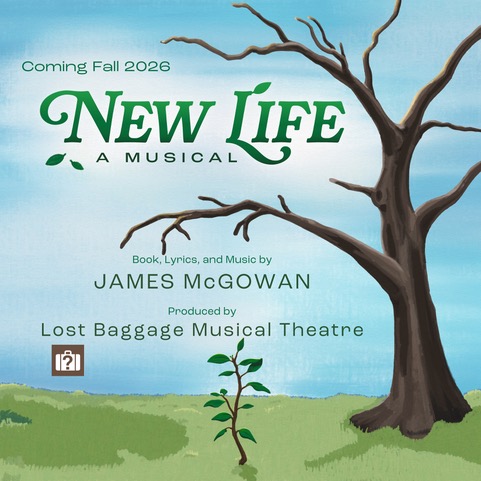
Music, Lyrics, and Book by James McGowan
Directed by Susan Blyth-Schofield
Produced by Mathieu Charlebois
The Gladstone Theatre
(910 Gladstone Avenue)
September 23-26, 2026
Evening Shows at 7:30pm | Doors at 7:00
Saturday Matinée at 2:30pm | Doors at 2:00
ABOUT NEW LIFE
Synopsis
This jazz-rock musical, set in 2010, is a story about a woman rebuilding herself and her family after her abusive husband dies. Her family of three adult kids—Alexandra (Alex), oldest; Robert (Robbie), middle child; Stephanie (Steph), youngest—and her minister each bring lots of baggage on this trip. The story is set partly in the country and partly in the city, which is about one-to-two hours away. The story tackles topics of intimate-partner abuse, child abuse, family dysfunction, alcoholism, homophobia, transphobia, misogyny, cultural differences between rural and urban life, tradition vs. change, personal growth, spiritual faith, and the Easter resurrection analogy.
Character Backstories
Mary (Mom) grew up in the suburbs and met Frank Smith when she was about 20. Frank was around 10 years older than her. She was generally quiet and insecure, and had started college studying English literature. Because Frank was interested in her and she was welcomed into his world in the country village, she abandoned her studies, overlooked his drawbacks, and got married. Her family wasn’t supportive of Frank or her choice to relocate. Mary tried to keep everyone happy for a while, but Frank eventually convinced her that her family of origin was trying to destroy their marriage, and told her to cut ties with them. Mary was unfulfilled and mostly depressed in this time. She read novels as her escape. When they had their first child, Alexandra, Frank was disappointed that she wasn’t a boy and didn’t pay much attention to her. Their second child was a boy, who they named Robert. Frank was happier and spent time with son, playing catch and taking him to little league baseball. Robert didn’t actually enjoy baseball, but did it to please his dad. Mary tried to give attention to both Alex and Robert, but whenever Frank said something disparaging, Mary backed off. During this time, Frank was drinking more and becoming increasingly verbally abusive. This caused Mary to disappear into the bedroom to read more often.
By the time their third child was born (Stephanie) Mary’s spirit had largely retreated. She occasionally had thoughts of wanting a new life and escaping her loveless marriage, but she couldn’t imagine what would happen to the children if she left Frank and the house. Over the next two decades, Frank drank more and started to become physically abusive. He still went to Robert’s games, but didn’t take any interest in Stephanie’s activities, even though Steph actually liked outdoor activities like baseball and riding her bike. Mom always suspected Steph was a lesbian, and was fully accepting, but they never talked about it and Steph never came out to her Dad.
Alex, sick of living in this family, moved in with her boyfriend Troy as soon as she could. But Alex found that Troy was also abusive, so she returned home. Mary wanted her to stay there to be safe, but Frank didn’t approve of her choices and kicked her out. Mary didn’t stand up for her daughter. Since Alex felt guilty for leaving Troy, she went back to him. This cycle repeated a few times. Each time, Mary was troubled by it, but gave in. Alex, nonetheless, tried to look after herself and became skilled as a hair stylist.
When he finished high school, Robert went off to college in the suburbs. He studied in a technical field, where he didn’t have to think about emotions, continuing the hiding that he had done at home. He met a woman who treated him with loving attention, who eventually became his Wife. They became engaged even before he graduated. He got a job in the suburbs and led an unfulfilling life. His relationship with his wife worsened after the marriage, when his wife became withdrawn and depressed. He felt emotionally abandoned. Even with the excitement of having two children, they lost intimacy in their lives while he immersed himself in his work and his kids’ lives. A couple of coworkers noticed that he wasn’t happy, and Robert opened up to them, finding it cathartic to actually discuss his problems. He started to develop friendships with them, but his wife disapproved of him spending time with them and talking about their secrets. She accused him of having an emotional affair. From that point on, she became far more controlling and emotionally abusive, particularly when Robert tried to stand up to her.
Shortly after Robert moved out, Steph decided that this truly dysfunctional family was unhealthy and left at 16. Alex supported her action, and invited Steph to stay with her and Troy near the village. But since Steph observed the abuse first-hand, and Troy didn’t want her there, she chose to leave. Steph then went to stay with her brother in the suburbs. He had already moved in with his fiancée. They put up with Steph for a while, but eventually his “wife” told Steph to leave, and Robert didn’t stand up for his sister. She now had no family members left to stay with, so she couch-surfed with friends and classmates. At one house, a guy tried to rape her, but she managed to fight him off. For a while, she lived unhoused without people knowing, but eventually graduated from high school. Empowered to take on the world, she went to the city to try to get employment at homeless shelters. She met Charlie, who took an interest in helping her. Although quite a bit older than Steph, they started dating. They soon broke up, but they remained close. Charlie gave her a safe space to live and Steph started university. She went through periods of significant ups and downs, but finished her degree. On a few occasions, she found work, but lost her job due to absenteeism, and found herself returning to the woman’s shelter for shift work. Her drinking became a bad coping strategy. Was she following in her father’s footsteps?
When Robert left, Mom moved into his old room and didn’t sleep with Frank anymore. Frank’s health started to decline, and he became more withdrawn. He stayed ornery, but was no longer physically abusive. Mary, who had gone to church with the children for several years when she moved to the village (before they rebelled and refused to keep going), resumed attending services without Frank, as she was seeking a community. She served on the minister search committee that called Norah, a trans woman, as she secretly held more progressive values, acquired from reading her novels. Not long after, Frank died in his sleep. Mary planned the funeral with Norah.
Born male, Norah was raised in the suburbs and knew from an early age that her gender assignment was wrong. Her grandparents, who she loved dearly, lived in the country—near the village where the musical is set—and she had many happy experiences there. She went to university for social work, and discovered a safe environment where she could transition. During this time she met Charlie, who was part of her Social Work student cohort. She had a strong faith and belief in God, but not with traditional Christian values. She discovered a welcoming community in the United Church of Canada, and she entered divinity school. While she encountered some resistance, she was supported enough to become one of the first ordained trans ministers. In reality, the first ordained openly trans person was Cindy Bourgeois (UCC) in 2010, and the first ordained openly trans person in the USA was Cameron Partridge (Episcopal) in 2012. Norah sought a calling in the country village because she wanted to live in the rural area that brought her joy. The search committee was comprised of mostly progressive-minded people, which included Mom (Mary Smith), and Norah was called to the church. There was, inevitably, a negative reaction among the conservative and intolerant membership of the church, which eventually forced Norah out.
One of the congregants is Mildred, who had gone to the country church her entire life. While membership had declined, she remained committed to maintaining the church traditions. She was like an aunt to Frank, so Mary had known her since she moved to the country. Having been raised to see homosexuality as a sin, she steadfastly held on to her homophobic and transphobic views. At times, she pretended to be accepting and progressive in order to keep up with changes in the mainstream church. This church was a good example of one that had an outwardly progressive stance, while a large percentage of its members still had non-inclusive values.
Mildred’s son, Gerald, knew Frank from the mill where they both worked, although they weren’t buddies. The mill shut down well before Frank died. Gerald didn’t have much of a life. He was dominated by his mother, with whom he frequently lived, in her basement, as an adult. He was a rather obnoxious MAGA-type. The same actor plays Gerald and Gerry, the gay Barista/Man-in-Bar, which raises the question of whether Gerald is the Barista/Man-in-Bar. It would be poetic justice for Mildred if her son hid that he was gay from her and maintained a double life.
A female Bartender, who works at the gay bar, ensures that LGBTQ+ patrons are looked after and safe.
PRODUCTION TEAM, CAST, & MUSICIANS
PRODUCTION TEAM
- Artistic Director: Susan Blyth-Scholfield
- Producer: Mathieu Charlebois
- Music Director: James McGowan
- Stage Manager:
- Set Designer:
- Prop Designer:
- Costume Designer:
- Lighting Designer: Katherine Kellner
- Sound Designer: John Rosefield
- Publicity Manager: Kenzie Barrera
CAST
- Mom: Sutida (May) Turcot
- Alex: Maggie Wolfe
- Robbie: Mathieu Charlebois
- Steph: Joy Mwandemange
- Norah: Amelia Pelley
- Gerald: Euan Wheaton
- Bartender: Sam Dillon (Wife/Mildred Swing)
- Wife/Mildred: Samantha Melis
- Wife/Mildred: Sharon P. (Bartender Swing)
- Mom Understudy: Melodi Uygur
- Alex Understudy: Ashley Barnes
- Robbie Understudy: Adrien Pyke (Gerald Swing)
- Steph Understudy: Samantha Brown
MUSICIANS
- Piano: James McGowan
- Guitar: Laetitia Lemieux
- Bass: JP Lapensée
- Drums: Jamie Holmes
- Violin: Cendrine Despax
- Reeds: Richard Page
MEDIA
“Rise from the Ashes” – Excerpt
“Changes” – Excerpt by Carleton University Choir featuring Joy Mwandemange
“Okay If I Cry” – Excerpt
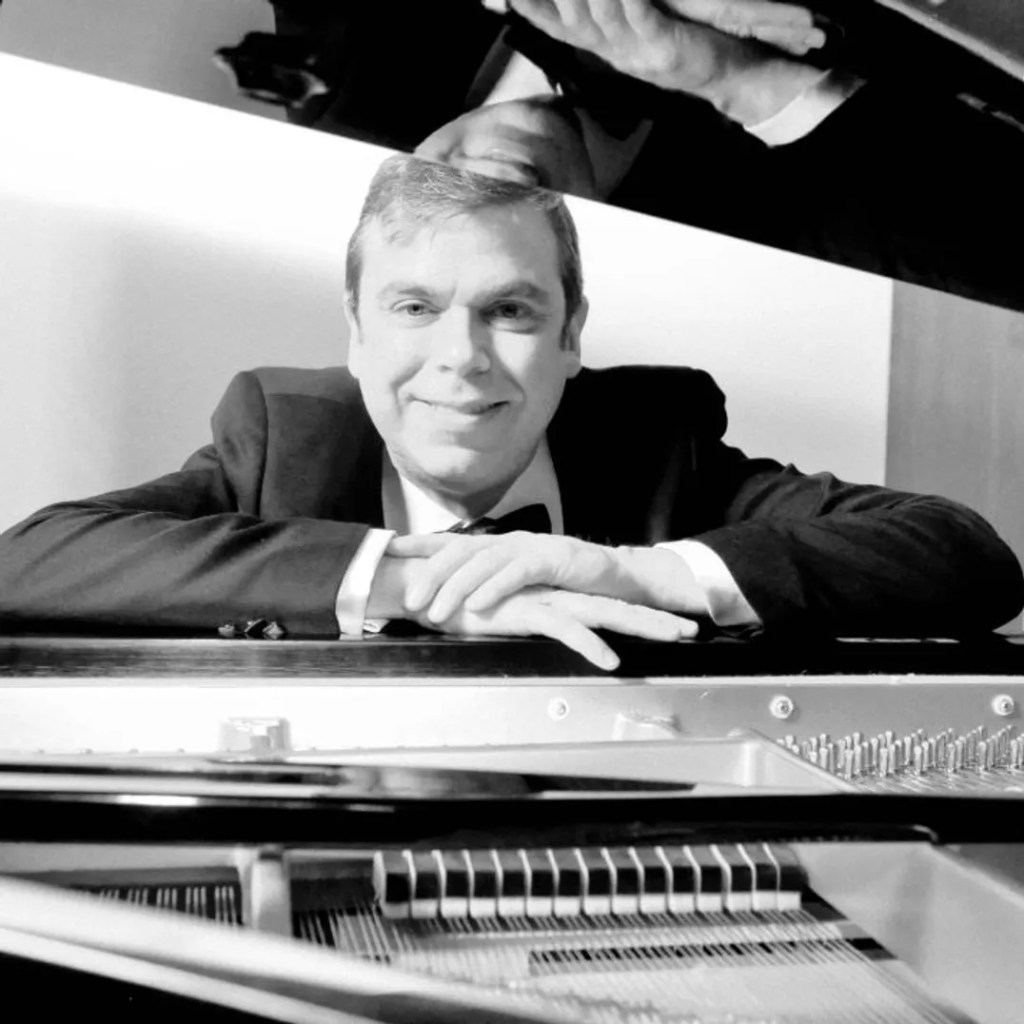
About Dr. James McGowan
James McGowan (PhD Eastman) is an Associate Professor of Music at Carleton University, where he teaches music theory and composition. He is a passionate educator and has won several teaching awards. He served as Carleton University Chair in Teaching Innovation (2020–23) for his work in developing experiences in the arts on campus and in the community. He is Managing Director of the Carleton Jazz Camp, an instructor at CAMMAC in piano and improvisation, and serves on the Board of Directors for Lotus Centre for Special Music Education in Ottawa. He is a published author of articles on jazz theory and music theory pedagogy.
Embracing multiple styles of music, Dr. McGowan is a solo and collaborative pianist, at home in jazz, classical, and improvised musics. He leads and composes music for the James McGowan Ensemble (ranging from 5–14 members), which released its jazz-classical fusion album Reaching Out in 2024 featuring his compositions and poetry, supported in part by a grant from the Canada Council for the Arts. In recent years, he has released seven albums as leader or co-leader, including the critically acclaimed Modasaurus album 4K.
 Lost Baggage Musical Theatre